
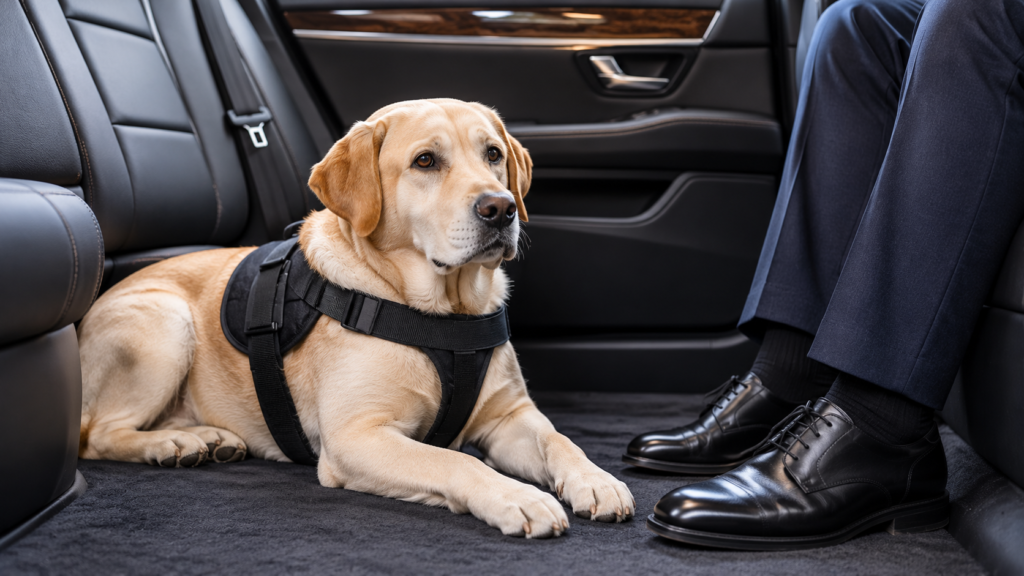
Yes, you can bring a service animal in a limo, and in most cases, a company cannot refuse it. Federal transportation rules require companies that transport people, including limousine services, to permit service animals, and Connecticut law adds its own protections. A driver may ask only two questions: whether the animal is required because of a disability, and what task it is trained to perform.
Companies cannot demand an ID card, ask for proof, or add a surcharge. This guide explains the rules, their limits, how to book in Connecticut, and what to do if a company still refuses service.
Key Takeaways
- Federal transportation rules require service animals to be permitted in vehicles of private transportation companies, and Connecticut’s law protects people with disabilities who use service animals.
- A driver may ask two questions. A driver may not ask about your disability or require an ID card, proof, or a demonstration.
- Connecticut law says a person with a disability may keep a service animal with them at no extra charge, as long as the animal stays in their direct custody and control.
- Allergies and fear of dogs are not valid reasons for refusing service.
- Emotional support animals and pets are not service animals under these rules. A company may set its own policy for them.
- This is general information, not legal advice.
What Counts as a Service Animal in a Limo?
A service animal is an animal individually trained to do work or perform tasks for a person with a disability. The work must be directly related to the disability, such as guiding someone who is blind, alerting someone who is deaf, or responding to a seizure. Comfort, companionship, and crime deterrence do not count.
The definition changes slightly depending on which rule applies, and that matters for transportation.
| Source | Who counts as a service animal | What to know |
|---|---|---|
| ADA.gov guidance for most businesses | Dogs individually trained to do work or perform tasks | Only dogs are recognized under titles II and III of the ADA |
| DOT’s transportation rule | Any guide dog, signal dog, or other animal individually trained to work or perform tasks | The ADA National Network notes that DOT kept a broader definition than the dogs-only one |
| Connecticut law | A dog trained to help a person with a disability | A 2024 General Assembly research report says Connecticut aligned its definition with the ADA’s |
| Emotional support animals and pets | Not service animals | Federal transit guidance says providers are only required to allow service animals |
If your service animal is not a dog, call ahead. The transportation rule recognizes other individually trained animals, but state law uses a narrower definition, and a company may not be familiar with the difference.
What Does the Law Say About a Service Animal in a Limo?
Two layers of law apply, and they work together.
Federal rules. The Department of Transportation’s rule, 49 CFR 37.167, says the entity “shall permit” service animals to accompany individuals with disabilities in vehicles and facilities. The section applies to public and private entities. The ADA National Network says these transportation laws cover private providers, including taxicabs, shuttles, and limousine services.
The Department of Justice has enforced this against a private ride service. In a settlement agreement, the company agreed to permit service animals on its rides without an additional surcharge.
Connecticut law. Under section 46a-44, a person with a disability may travel on “any other mode of public transportation” accompanied by their service animal and keep it with them at no extra charge, provided it stays in their direct custody and control. Intentionally denying those rights is a class C misdemeanor. Connecticut rewrote this statute in 2024 to cover any person with a disability and to use the ADA’s definition.
One caution: the statute does not define “mode of public transportation,” so how a court would apply it to a private limo is not settled. Federal rules apply to private transportation companies regardless, which is why this guide treats the state law as extra protection rather than the main authority. Ask an attorney about a specific situation.
What Can a Driver Ask, and What Is Off Limits?
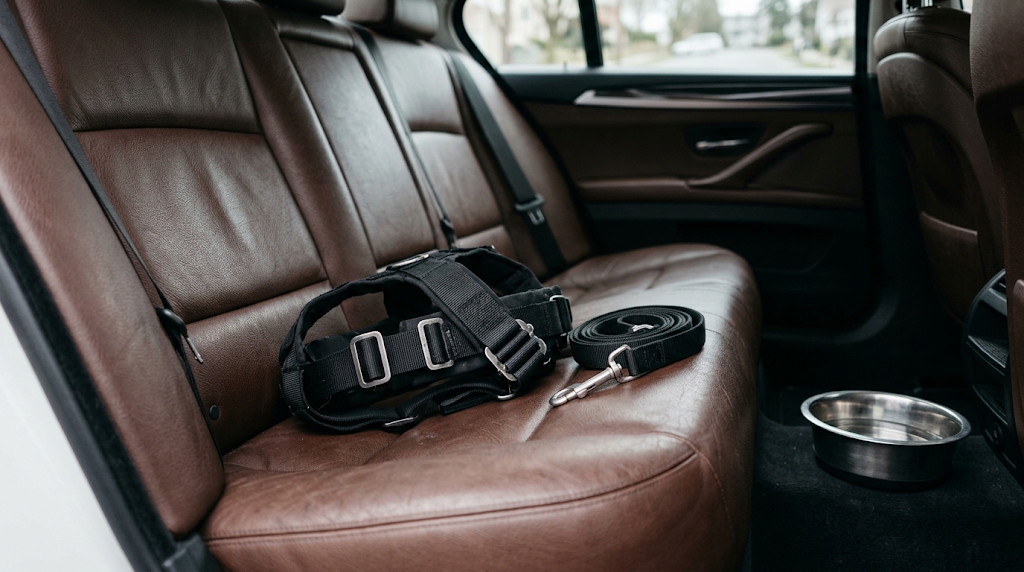
When it is not obvious what a service animal does, a driver has a short, fixed list of permitted questions. Federal transit guidance and ADA.gov describe the same limits.
| A driver or company MAY | A driver or company may NOT |
|---|---|
| Ask whether the animal is a service animal required because of a disability | Ask about your disability |
| Ask what work or task the animal has been trained to perform | Require a special ID card, medical documentation, or training papers |
| Ask that the animal stay under your control | Ask the animal to demonstrate its task |
| Exclude the animal if it is out of control and you do not take effective action, or if it poses a direct threat to others | Refuse because of allergies or fear of dogs |
| Hold you responsible for damage the animal actually causes | Add a pet fee, deposit, or surcharge because you have a service animal |
On allergies, ADA.gov says allergies and fear of dogs are not valid reasons for refusing service. If a driver or another rider has an allergy, the answer is to adjust seating or scheduling where possible, not to turn away the person with the service animal. Connecticut’s statute also says you may keep your service animal with you at no extra charge.
How to Book a Limo With a Service Animal
You are not required to tell a company in advance that you will bring a service animal in a limo, because the law does not make you give notice. A short heads-up helps the company plan the vehicle and seating, though, and it can prevent a surprise at the curb. Work through these steps in order.
- Tell the company when you book. Mention that you will have a service animal, so it can match a vehicle with enough floor space.
- Skip the paperwork. You do not need to bring documentation, an ID card, or a vest to satisfy the legal rules.
- Ask about the vehicle. Floor space differs between a sedan, an SUV, and a stretch limo with side-facing seats. MKC’s vehicle capacity guide covers how much room each type offers.
- Confirm there is no fee. Ask the company to confirm in writing that no surcharge, deposit, or cleaning fee applies to a service animal.
- Plan for the trip length. On a long ride, ask about stops so the animal can relieve itself, and keep water on hand.
- Keep the animal under control. Use a harness, leash, or whatever your animal is trained to work with, and keep it with you.
- Share the plan with anyone riding with you. Everyone should know where the animal will sit so the ride stays comfortable.
If you are booking for a guest, mention the service animal when you request the quote and check seating for the whole group. For what to expect once the ride starts, MKC’s first-timer guide walks through boarding and the ride.
Keeping the Ride Smooth: Handler Tips
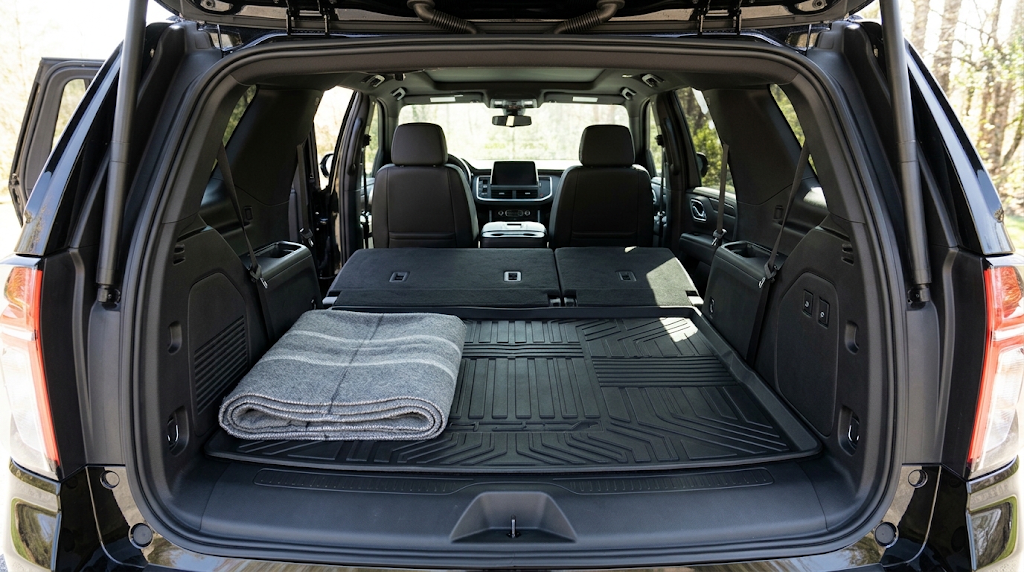
The law sets one firm expectation for the animal: it stays under your control. Beyond that, a few habits make the ride easier for everyone. These are practical suggestions, not legal requirements.
- Keep the leash short and the animal at your feet or beside you.
- Bring a mat or blanket and a water bowl for longer trips.
- Tell the driver if the animal needs a break, so the stop can be planned.
- Keep the animal clear of the aisle and other riders’ seats in a larger vehicle.
- Take the animal out before the ride if the trip is long, and again right after.
A handler is responsible for the animal’s behavior and for damage it causes. Companies that deal with this calmly usually do so because both sides know what to expect.
Planning a Service Animal Ride by Occasion limo
| Ride | What to plan |
|---|---|
| Airport transfer | Allow time for a relief break before departure and after landing, and tell the driver where you will meet. MKC’s Bradley Airport guide covers arrivals and departures. |
| Night out or event | Ask about music volume and cabin lighting, and choose seating with floor space near your feet. |
| Wedding or formal event | Share the group size and attire so the vehicle leaves room for everyone, including the animal. |
| Long-distance trip | Ask about planned stops and how long the route runs. |
What If a Driver or Company Refuses?
A refusal to carry a service animal in a limo can be stressful, especially when you are at a curb with a deadline. Stay calm and work through these steps.
- State your rights simply. You can say the animal is a service animal required because of a disability and name the task it performs.
- Ask for the reason. Note whether the stated reason is one the law allows, such as an out-of-control animal, or one it does not, such as allergies or a policy against dogs.
- Write down the details. Record the date, time, company name, driver, vehicle, and what was said.
- Ask the company for an alternative ride if it will not carry the animal, and keep any messages.
- File a complaint. The Connecticut Commission on Human Rights and Opportunities accepts discrimination complaints in areas that include public accommodations. CT DOT takes written complaints about livery companies through its complaint form.
- Consider legal advice if the refusal caused real harm or cost you a trip.
For checking a company before you book, MKC’s guide to avoiding limo scams in Connecticut explains how to verify licensing.
Emotional Support Animals and Pets in a Limo
An emotional support animal, comfort animal, or pet is not a service animal under the ADA, and Connecticut law uses the ADA’s definition. The transit guidance cited above says providers are required to allow service animals, and Federal Transit Administration guidance says comfort animals are not covered by that requirement.
That does not mean the answer is automatically no. A company can choose to allow pets or emotional support animals under its own policy, and many set conditions such as carriers or advance notice. Ask the company directly, and get its answer in writing.
If you are not sure whether your animal qualifies as a service animal, call and explain what the animal is trained to do. The company can then tell you honestly what it can accommodate.
Frequently Asked Questions
Can a limo company refuse a service animal? Generally no. Federal transportation rules require companies that transport people to permit service animals, and a company may exclude one only if it is out of control and the handler does not take effective action, or if it poses a direct threat to others.
What can a limo driver ask about a service animal? Two things: whether the animal is required because of a disability, and what work or task it has been trained to perform. A driver cannot ask about your disability or require an ID card, proof, or a demonstration.
Can a limo company charge extra for a service animal? No. Connecticut law says a person with a disability may keep a service animal with them at no extra charge, and a federal settlement with a private ride service required service animals to ride without a surcharge. A handler can still be responsible for damage the animal actually causes.
Are emotional support animals allowed in a limo? Not as a matter of right. Emotional support animals are not service animals under the ADA, so each company sets its own policy. Ask before you book.
Does a service animal need a vest or ID? No. The law does not require a vest, ID card, or special documentation, and a driver cannot demand one. Keeping the animal under your control is what matters.
Can a service animal be removed from a limo? Only in limited situations: the animal is out of control and the handler does not take effective action, or it poses a direct threat to the health or safety of others. Even then, the person with the disability should still be offered the ride without the animal.
Ask About Service Animals Before You Book
Ask every company the questions above, MKC Limo included, and get its service animal policy in writing. A company that answers clearly about space, fees, and its two permitted questions is telling you how it treats riders.
To get a quote, contact MKC Limo with the date, pickup address, group size, and a note about your service animal. For vehicles and service areas, MKC’s Hartford limo service guide is the place to start, and the cancellation policy guide explains what to ask about changes.
MKC Limo Service Hartford County’s chauffeured airport and executive car service