

Corporate holiday party transportation works best when you plan the ride home first and the ride there second. In Connecticut, most offices choose one of three setups: a shuttle loop from the office, vehicles sent to several pickup points, or vehicles staged at the venue for a late exit. The right pick depends on headcount, venue distance, and whether alcohol is served.
Book early, since holiday dates are popular for every kind of event. This guide shows how to choose a setup, build a timeline, estimate vehicle counts, and decide what to confirm with a company before you sign anything.
Key Takeaways
- Plan the exit before the entrance. Connecticut officials tell people to line up a sober ride before they start celebrating.
- Pick the setup by headcount and how spread out your people are: a shuttle loop, multiple pickups, staged vehicles, or a mix.
- Departures often bunch up, so size the fleet for the end of the night, not the start.
- Count seats and trip time, not invitations. The vehicle math in this guide takes about two minutes.
- Ask for an itemized quote, then divide by the number of employees who will ride.
- Put cancellation, weather, and overtime terms in writing before you pay a deposit.
What Does Corporate Holiday Party Transportation Cover?
Corporate holiday party transportation is group transportation arranged by an employer for a company celebration. It usually covers up to three phases: getting people to the venue, moving between venues if the evening has more than one stop, and getting everyone home. Some companies pay only for the ride home, which is the phase that carries the most risk.
Each phase has its own timing. Arrivals tend to spread out over an hour or more, while departures often bunch up when a speech ends or the bar closes. That gap shapes how many vehicles you need and when they should be waiting.
Why the Ride Home Is the Part to Get Right
Connecticut and federal officials treat the holiday season as a high-risk stretch for impaired driving. CTDOT’s December 2025 release reported that 113 people were killed in alcohol-impaired crashes in Connecticut in 2023, the most recent year with verified data, and urged people to plan a sober ride before celebrating. NHTSA’s winter-holiday campaign page lists paid media running from December 16, 2026 through January 1, 2027.
The same CTDOT release cites NHTSA data showing that alcohol impairment among drivers in fatal crashes was three times higher at night than during the day in 2023. Drivers ages 21 to 34 made up the largest share of impaired drivers in those crashes. Evening office parties sit inside that window.
That does not make transportation a legal requirement for employers. What an employer owes employees after a company event is a legal question, so ask your attorney or insurer instead of relying on a vendor’s marketing. CTDOT’s guidance points people to a designated sober driver, rideshare, taxi, or transit, and a booked group vehicle is one more way to remove the need for each person to arrange a ride at the same moment.
Which Setup Fits Your Office?
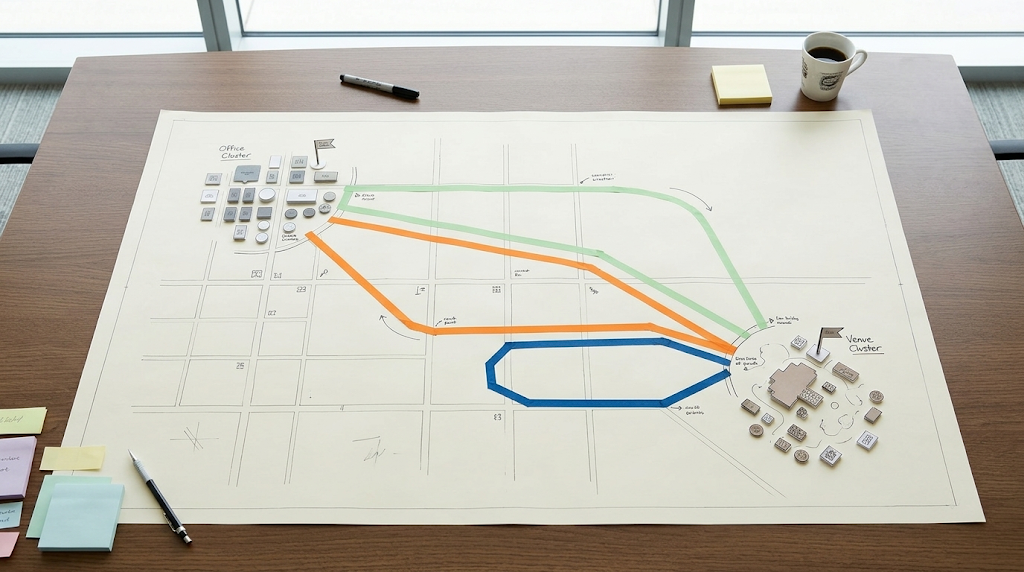
Most companies land on one of the setups below, or a blend of two. The best choice depends on where employees start, how far the venue is, and when people will leave.
| Setup | How it works | Best for | Watch for |
|---|---|---|---|
| Shuttle loop from one point | One or more vehicles run between the office or a meeting point and the venue | A single office with a venue a short drive away | Loop time versus departures bunching up |
| Multiple pickup routes | Vehicles collect employees from several offices or towns | Hybrid teams and multi-site companies | Longer routes and coordinating pickup times |
| Staged vehicles for the exit | Vehicles wait at the venue and leave as groups are ready | Parties where people arrive on their own but leave together | Waiting time and overtime charges |
| On-call sedans and SUVs | Individual rides for small groups | Executives, small teams, late stayers | Dispatch time if many people ask at once |
| A mix | For example, a loop in and staged vehicles out | Most mid-size parties | More moving parts to explain to staff |
Vehicle size follows headcount. Typical seating runs about 2 to 3 for a sedan, 4 to 6 for an SUV, 10 to 14 for a Sprinter van, and 14 to 30 or more for a party bus. Confirm the exact capacity of the vehicle you are booked on, and see MKC’s vehicle capacity guide for comfortable versus maximum seating.
How Many Vehicles Do You Need?
Start from the people who will actually ride, not the invitation list. Then work through this:
- Estimate how many employees will ride, based on RSVPs.
- Divide by the seats in each vehicle to get the number of loads.
- Ask the company for the one-way drive time between pickup and venue, and double it for a round trip.
- Multiply the loads by the round-trip time to see how long one vehicle would take.
- Add vehicles until the last load leaves when you want it to.
Here is the math with made-up numbers. Say 48 employees will ride in vehicles that carry 12 each, which is 4 loads. If a round trip takes 40 minutes, one vehicle needs about 2 hours and 40 minutes to move everyone.
Two vehicles cut that to about 80 minutes. These figures illustrate the method and are not Connecticut travel times.
The exit usually decides the answer. If most people leave in the same 30 minutes, one slow loop leaves some of them waiting in the cold. Size the fleet, or stage vehicles, for that peak.
A Planning Timeline You Can Copy
The schedule below is a suggested working order for corporate holiday party transportation, not a rule. If your party is less than three weeks away, start the quote requests now.
| When | What to do |
|---|---|
| As soon as the date and venue are set | Ask companies about availability and request itemized quotes |
| 3 to 4 weeks before | Settle headcount, pickup points, and routes, then read the agreement before signing |
| 1 to 2 weeks before | Send employees pickup times and one contact number |
| The day before | Confirm vehicle count, pickup addresses, and driver contact with the company |
| Party night | Name one coordinator, set a last-departure time, and keep the dispatcher’s number handy |
| The day after | Settle overtime and gratuity according to the agreement |
What Does Corporate Holiday Party Transportation Cost?
Pricing varies by company and date, so this guide does not quote numbers. What matters is knowing which line items move the total.
| Cost factor | Why it matters |
|---|---|
| Vehicle type and count | Larger vehicles and more of them raise the total |
| Booked hours, including staging | You may pay for time vehicles spend waiting |
| Number of pickup points | More stops can mean longer routes and more time |
| Overtime | Parties that run past the agreed end time are often billed extra |
| Gratuity | Confirm whether it is included or separate |
| Tolls, fuel, and surcharges | Confirm which are in the quote |
| Peak-date premiums | Popular dates may be priced differently |
| Deposit and cancellation terms | These decide what you lose if plans change |
To compare corporate holiday party transportation quotes fairly, ask each company for an itemized total that includes gratuity and tolls, then divide by the number of employees who will ride. A low hourly rate can end up costing more once staging time and overtime are added. For the pricing mechanics behind group vehicles, MKC’s party bus pricing guide and limo cost guide break down what drives the number, and the tipping guide covers gratuity.
What If It Snows on Party Night?
December weather in Connecticut can change the plan. Ask each company how it decides whether conditions are safe to operate, what happens to your deposit if the company cancels, and whether a weather clause covers your date. “Bad weather” is not a definition, so ask what specifically counts.
Also decide who on your side calls it if the party itself is postponed, and by what hour. MKC’s limo cancellation policy guide walks through how to compare deposit, weather, and rescheduling terms before you pay.
How to Tell Employees About the Plan
A good plan fails when nobody knows about it. Send the details in one message and repeat them close to the date.
- Pickup points and times, including the last pickup
- The last departure time from the venue
- One phone number for the night
- Where the vehicles wait at the venue
- Any rules for riding, such as the vehicle’s alcohol policy, which varies by company
Keep the tone simple. The message should read as a convenience, not a requirement.
What to Confirm Before You Book
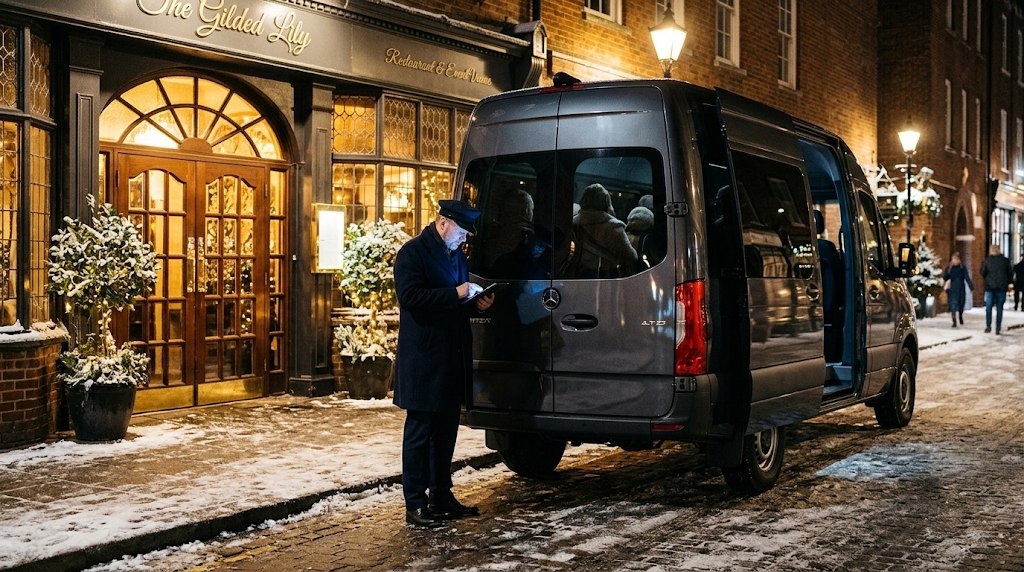
Take this list to every company you are comparing, and get the answers in writing.
| Ask | Why it matters |
|---|---|
| How many vehicles, what type, and how many seats each? | Matches the fleet to your headcount |
| What are the routes, pickup points, and times? | Prevents day-of confusion |
| Where do vehicles stage at the venue, and for how long? | Decides how long people wait at the end |
| What is the overtime rate and how is it billed? | Parties often run late |
| What happens if the headcount changes? | RSVPs move |
| Are gratuity and tolls included? | Defines the real total |
| What are the deposit, cancellation, rescheduling, and weather terms? | Sets your risk |
| What is the alcohol policy inside the vehicle? | Policies differ |
| Is the company licensed and commercially insured in Connecticut? | Protects you and your employees |
| Who is the dispatcher and driver contact for the night? | Someone must be reachable |
The Connecticut Department of Consumer Protection’s event tips, a 2014 release still posted in its archive, advise naming the exact vehicle in the contract and agreeing on the ending time. For verifying a company before you pay, see MKC’s guide to avoiding limo scams in Connecticut.
Frequently Asked Questions
Is a company required to provide transportation for a holiday party?
The CTDOT release and NHTSA campaign page cited in this guide focus on drivers, not on what employers must provide. What an employer owes employees after a company event is a legal question, so ask your attorney or insurer.
How far in advance should we book?
Start as soon as the date and venue are set, and call now if the party is less than three weeks away. Holiday dates are popular for every kind of event, so ask each company how much notice it needs for your night.
How many people fit in a Sprinter van or party bus?
Typical seating runs about 10 to 14 for a Sprinter and 14 to 30 or more for a party bus, but the exact number depends on the vehicle. Confirm the seated capacity of the specific vehicle you are booked on, and keep in mind that bar areas and luggage reduce usable space.
Can we pick employees up at several locations?
Yes, many companies can run multiple pickup points. Ask how they price extra stops and how they time the route, since each stop adds minutes to every loop.
Who pays the driver’s tip?
It depends on the agreement. Ask whether gratuity is included in the quote or billed separately, and put the answer in writing so there is no surprise on the night.
What if the party runs late or the weather turns?
Ask for the overtime rate and the weather and cancellation terms before you sign. A vehicle staged at the venue keeps billing while it waits, so set a clear end time and a named person who can extend it.
Plan the Ride Home Before You Send Invitations
Ask each company the questions above, MKC Limo included, and get the answers in writing. A clear reply before you pay a deposit tells you how the company handles problems later.
To get a quote from MKC Limo, contact MKC with the party date, venue, expected number of riders, pickup locations, and the time the party ends. Planning a New Year’s Eve company event too? MKC’s New Year’s Eve guide covers that night, and MKC’s Hartford limo service guide covers vehicles and service areas.
MKC Limo Service Hartford County’s chauffeured airport and executive car service